
The following scholars have kindly agreed to deliver plenaries:
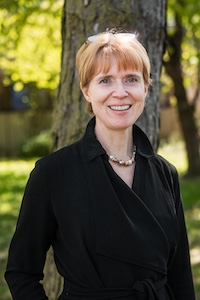 Astrid Ensslin is Professor for the Dynamics of Virtual Communication Spaces, Founding Director of DAS|LAB (Digital Area Studies Lab) and Vice President for Artificial Intelligence, Digitalization and Outreach at the University of Regensburg.
She has published widely on ludolinguistics and discourses of games and play, (post)digital narratives and cultures, digital-born fiction and literary computer games, digital health studies, critical community co-design and narrative therapy, the spatial design and narrative potential of virtual realities, as well as methods of digital humanities, participatory action research and cognitive reader-response.
She is a PI on the DFG/AHRC-funded “Project StoryMachine”, and Co-PI on the Marsden-funded “FEMTRACK” project as well as the DFG-funded research network, “Knowledges of Digital Literature”.
Her current book projects include the Handbook of Language and Digital Culture (co-edited with Carmen Lee, De Gruyter Mouton), Videogames as Folkworlds (co-edited with Dom Ford & Laura Niebling, Play Story Press), and Researching Videogame Language: A Ludolinguistic Approach (co-authored with Frazer Heritage, Routledge).
Photo by: Julia Dragan
Abstract
Research on language ideologies in video games has shown that speech accents are strategically employed to construct fictional worlds and to position characters morally and socially as well as in line with dominant language ideologies and cultural stereotypes (Ensslin 2010; Goorimoorthee et al. 2019; Stein 2023). Such performed, voice-acted accents reflect real-world biases held by developers and target audiences and often serve to reproduce and reinforce existing social hierarchies (Villanueva & Ensslin 2021). Yet they have also been leveraged by indie game designers in particular to shape socially diverse fictional societies (Kjeldgaard‐Christiansen & Hejná 2022). Meanwhile, in the paratextual sphere, players and influencers use social media platforms to construct and negotiate meritocratic status through metalinguistic signalling and folk linguistic, vernacular theory crafting (Tarnarutckaia & Ensslin 2019; Spowage 2025), placing themselves on a spectrum between lay and expert discourse.
In this talk, I develop a theory of videogame speech accents both as a pragma-performative sociophonetic repository and an object of narrative game design and meritocratic gamer discourse. Based on the distinction between orthogame and paragame discourse (Carter et al. 2012), I zoom in on language ideologies underlying character design, voice acting and accent distribution, players’ metalinguistic discourse and the more recent phenomenon of the “folk” ludolinguist, who acts as “lingfluencer” on social media and particularly streaming platforms in a way that may come to shape public and particularly GenZ understanding of language categories, usage, and linguistic theory more generally.
References
Carter, Marcus, Martin Gibbs & Mitchell Harrop. 2012. Metagames, paragames and orthogames: A new vocabulary. In Proceedings of the International Conference on the Foundations of Digital Games (FDG '12), 11–17. New York: Association for Computing Machinery.
Ensslin, Astrid. 2010. Black and white: Language ideologies in computer game discourse. In Sally Johnson & Tommaso Milani (eds.), Language Ideologies and Media Discourse: Texts, Practices, Policies, 205–222. London: Continuum,
Goorimoorthee, Tejasvi, Adrianna Csipo, Shelby Carleton & Astrid Ensslin. 2019. Language ideologies in videogame discourse: Forms of sociophonetic othering in accented character speech. In Astrid Ensslin & Isabel Balteiro (eds.), Approaches to Videogame Discourse: Lexis, Interaction, Textuality, 269–287. London: Bloomsbury.
Kjeldgaard‐Christiansen, Jens & Míša Hejná. 2022. The voices of game worlds: A sociolinguistic analysis of Disco Elysium. Games and Culture 18(5), 578–597.
Spowage, Kate. 2025. Against the game: Sid Meier’s Civilization and vernacular theories of language. Language in Society 55(3), 502–522.
Stein, Simon David. 2023. Space rednecks, robot butlers, and feline foreigners: Language attitudes toward varieties of English in videogames. Games and Culture 18(8) 1043–1070.
Tarnarutckaia, Elizaveta & Astrid Ensslin. 2019. The myth of the “clarté française”: Language ideologies and metalinguistic discourse of videogame speech accents on Reddit. Discourse, Context & Media 33, 100352.
Villanueva, Emily & Astrid Ensslin. 2021. Divine intervention: Multimodal pragmatics and unconventional opposition in performed character speech in Dragon Age: Inquisition. In Gaëlle Planchenault & Livia Poljak (eds.), Pragmatics of Accents, 205–228. Amsterdam: Benjamins.
Videogame Speech Accents as Performed Identity, Ideology, and Folk (Ludo)linguistics Videogame Speech Accents as Performed Identity, Ideology, and Folk (Ludo)linguistics
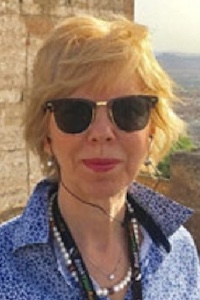 Maria Pavesi
University of Pavia
 Roman Schneider is Professor and head of the programme area "Language Information Systems" at the Leibniz Institute for the German Language (IDS) in Mannheim. His research addresses language variation and change and linguistic cases of doubt, combining large annotated corpora with, more recently, language models, both as a source of data and as an object of study.
He conceived and implemented grammis, the IDS online grammar portal, and continues to direct it. Combining a scientific grammar of German with terminological and lexicographic resources, it is also used in teaching German as a foreign language.
His second focus is the Songkorpus, a multilayer-annotated corpus of German song lyrics spanning seven decades. With it he asks how far established descriptive and quantitative instruments carry when applied to performed language, a question his recent work extends to generated text as a methodological control.
Homepage: https://www.ids-mannheim.de/en/gra/personal/schneider/
Abstract
Song lyrics are among the most widely circulated texts in most speech communities, yet they entered corpus linguistics relatively late. This talk introduces the Songkorpus (Schneider 2026, in press), a large annotated collection of German lyrics spanning seven decades, and argues that performed language is not deficient data but a stress test for our analytical instruments. Two claims organise the talk.
First: building the corpus is already an act of measurement. Lyrics look like spoken language by standard register measures (Werner 2021; Schneider & Broll 2026) – direct address, contractions, low lexical density – although none of the situational conditions for spontaneous speech apply: the involvement is staged rather than interactional (Biber 1988; Koch & Oesterreicher 1985). Such material forces decisions – what counts as an error, which tagger to trust, how much a language model may "tidy up“ – that rarely appear in published results, yet determine what subsequent analyses can detect. Three cases illustrate the problem: standard taggers disagree substantially on how much of the vocabulary they recognise; a common sung reduction is misread as an imperative, turning a phonological phenomenon into a speech act; and LLM pre-editing repairs precisely those forms that make the material analytically interesting.
Second: what the instruments detect depends on how phenomena are operationalised. Idiomatic creativity becomes visible only when fixedness and contextual mismatch are measured jointly (Amin et al. 2021). The same reasoning motivates a control corpus of 10,800 AI-written lyrics, generated under systematically varied conditions. These texts reproduce many surface characteristics of the genre without being bound by its formal constraints, which makes them a null model rather than a competitor: whatever separates them from human lyrics is a candidate for what performance contributes. Across all levels of description we examined, the same structural fact emerges: the model differentiates topics, not genres.
The talk shows that performed language is open to systematic analysis, provided we report the constraints our measures compete with.
References
Amin, Miriam, Peter Fankhauser, Marc Kupietz & Roman Schneider. 2021. Data-driven identification of idioms in song lyrics. Proceedings of the 17th Workshop on Multiword Expressions (MWE 2021), 13–22.
Biber, Douglas. 1988. Variation across Speech and Writing. Cambridge: Cambridge University Press.
Koch, Peter & Wulf Oesterreicher. 1985. Sprache der Nähe – Sprache der Distanz. Romanistisches Jahrbuch 36. 15–43.
Schneider, Roman & Sarah Broll. 2026. Revisiting the immediacy-distance continuum: Evidence based automatic text type classification. Computational Humanities Research 2, 24. https://doi.org/10.1017/chr.2026.10041
Schneider, Roman. 2026. Pop lyrics through time: Challenges in corpus-based modeling of linguistic and emotional dynamics in German pop lyrics. Proceedings of the 12th Workshop on Challenges in the Management of Large Corpora (LREC 2026). Palma de Mallorca LREC.
Schneider, Roman. In press. Linguistic resources for the study of pop culture. In Valentin Werner, Andrew Moody & Cecelia Cutler (eds.), Handbook of Language and Pop Culture. Berlin: De Gruyter Mouton.
Werner, Valentin. 2021. Catchy and conversational? A register analysis of pop lyrics. Corpora 16(2). 237-270.
Rethinking Linguistic Evidence through the Measurement of Performed Language: A Song Corpus Approach Rethinking Linguistic Evidence through the Measurement of Performed Language: A Song Corpus Approach
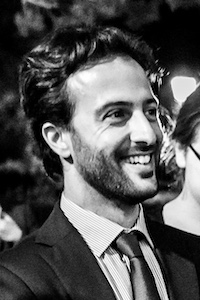 Raffaele Zago is Associate Professor of English Language and Linguistics at the University of Catania.
His research interests encompass spoken English, register variation, corpus linguistics, discourse analysis, telecinematic dialogue and – more recently – informal media-based contact with English.
He has addressed a number of topics in telecinematic linguistics, including vocatives, colloquiality, colloquialisation, questions, phraseology, expressivity, and pragmatic and lexico-grammatical complexity.
He has investigated these topics via a range of corpus-based methods such as multi-dimensional analysis, keywords, n-grams and dispersion.
He has published two monographs (From Originals to Remakes: Colloquiality in English Film Dialogue over Time, 2016; Cross-linguistic Affinities in Film Dialogue, 2018) as well as various journal articles and chapters in edited books.
He is co-author of the volume In Contact with English: Informal Media-driven Learning among Italian University Students (2025) and co-editor of the volumes Language, Expressivity and Cognition (2023; Bloomsbury) and English Studies in Italy: New Directions and Perspectives (2024).
He served as local coordinator of the national project The Informalisation of English Language Learning through the Media: Language Input, Learning Outcomes and Sociolinguistic Attitudes from an Italian Perspective (2023-2026).
Abstract
Werner et al. (2025: 7-8) note that films and TV series may be viewed as “core” artifacts in Pop Cultural Linguistics. Indeed, fictional dialogue in film and television has been investigated from multiple perspectives and methodological angles, as documented in Bednarek and Zago (2024). This talk reflects on selected characteristics that define telecinematic language as a type of performed and represented dialogue, drawing on a corpus-based approach.
The feasibility of conducting a multi-dimensional analysis (Biber 1988) of a corpus of films or TV series (e.g. Veirano Pinto 2014), even of a relatively small one (Zago 2021), points to the variation existing within and across these pop cultural products. Such variation largely stems from their situational heterogeneity: films and TV series represent a multiplicity of interactions and settings, ranging, for instance, from markedly informal exchanges to highly formal and institutional encounters. In principle, this diversity could expose viewers to an ever-changing range of language uses. Yet situational heterogeneity tends to manifest itself linguistically in recurrent patterns, two examples being the conversational and emotional ‘texture’ of telecinematic interactions (Bednarek 2018; Forchini 2025).
I will discuss this co-presence of variation and regularity mainly from a register-functional perspective (Biber et al. 2022). In this respect, I will approach telecinematic dialogue as a twofold register shaped simultaneously by realistic and narrative imperatives: a representation in which features of real language are appropriated and put at the service of diegesis. In this process, linguistic features acquire additional communicative force, as the functions they perform on the screen build on and extend those performed off the screen. The process can continue online through the creation of telecinematic fragments (e.g. via memes, reels, GIFs), which become part of wider processes of pop cultural re-circulation and re-contextualisation (Zündel 2025). I will also consider the role of genre in modulating variation and in channelling it into linguistic patterns and conventions, while at the same time acknowledging that broad register- and genre-specific tendencies do not override the stylistic specificity of individual films and TV series (Bednarek 2012).
References
-
Bednarek, Monika. 2012. ‘Get us the hell out of here’: Key words and trigrams in fictional television series. International Journal of Corpus Linguistics 17(1): 35-63.
-
Bednarek, Monika. 2018. Language and Television Series. A Linguistic Approach to TV Dialogue. Cambridge: Cambridge University Press.
-
Bednarek, Monika and Zago, Raffaele. 2024. Bibliography of linguistic research on fictional (narrative, scripted) television series and films/movies, version 7 (September 2024). Available at https://unico.academia.edu/RaffaeleZago.
-
Biber, Douglas. 1988. Variation across Speech and Writing. Cambridge: Cambridge University Press.
-
Biber, Douglas, Bethany, Gray, Staples, Shelley and Egbert, Jesse. 2022. The Register-Functional Approach to Grammatical Complexity. Theoretical Foundation, Descriptive Research Findings, Application. New York/London: Routledge.
-
Forchini, Pierfranca. 2025. Decoding Movie Language through Multi-Dimensional Analysis and the Grammar of Graphics. Amsterdam/Philadelphia: John Benjamins.
-
Veirano Pinto, Marcia. 2014. Dimensions of variation in North American movies. In Multi-Dimensional Analysis, 25 Years on. A Tribute to Douglas Biber, Tony Berber Sardinha and Marcia Veirano Pinto (eds), 109-147. Amsterdam/Philadelphia: John Benjamins.
-
Werner, Valentin, Hiramoto, Mie and Flanagan, Paul. 2025. Language and pop culture: Setting the agenda. Journal of Language and Pop Culture 1(1): 1-17.
-
Zago, Raffaele. 2021. Film discourse. In The Routledge Handbook of Corpus Approaches to Discourse Analysis, Eric Friginal and Jack A. Hardy (eds), 168-182. London/New York: Routledge.
-
Zündel, Jana. 2025. Between memeability and televisuality: The (self-)memefication of television series. Media and Communication 13, Article 9408. Available at https://www.cogitatiopress.com/mediaandcommunication/article/view/9408.
Sounds like Speech, Works like Fiction: Variation and Regularity in Telecinematic Dialogue Sounds like Speech, Works like Fiction: Variation and Regularity in Telecinematic Dialogue